Vintage Beach Chair Clipart PNG
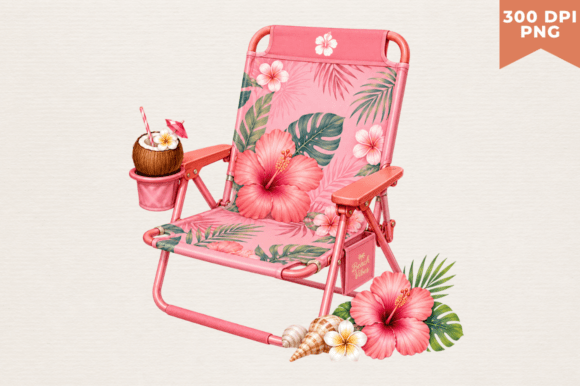
There’s something quietly powerful about a well-designed vintage beach chair clipart PNG — it doesn’t shout, but it anchors a mood. Think sun-bleached wood, curved wicker, striped canvas, and the quiet nostalgia of lazy afternoons by the shore. This isn’t just decoration; it’s a versatile visual cue that evokes relaxation, summer spontaneity, and timeless coastal charm — all in a single high-resolution file with a transparent background.
Why This Clipart Stands Out for Real Projects
Unlike generic beach icons or overused palm tree vectors, this Vintage Beach Chair Clipart PNG is crafted with intention: clean lines, balanced proportions, and subtle texture cues that hold up across scales and substrates. Because it’s delivered as a true PNG with full transparency, you skip tedious background removal or layer adjustments. It’s ready — not “almost ready” — for immediate use in production workflows.
That matters when you’re managing tight deadlines for client work, launching a seasonal product drop, or batch-producing items for your Etsy shop. No pixelation on mugs. No fuzzy edges on sublimated tote bags. No surprises when scaling for wall art or embroidery digitizing prep.
Creative Applications That Go Beyond the Obvious
Yes, it works beautifully on t-shirts — especially for boutique apparel brands leaning into retro-coastal aesthetics. But its real strength lies in adaptability:
- Sublimation printing: Layer it over soft pastel gradients or textured linen backgrounds in Canva or Photoshop to create cohesive collections — think matching tumblers, coasters, and beach towels.
- Print-on-demand (POD): Pair it with minimalist typography (“Saltwater Therapy”, “Low Tide & High Vibes”) for greeting cards or notebook covers. The chair becomes an anchor point — simple, recognizable, and emotionally resonant.
- Craft cutting machines: Import directly into Cricut Design Space or Silhouette Studio. Resize confidently for vinyl decals on water bottles, stencil templates for painted signs, or layered paper-cut greeting cards with dimensional depth.
- Educational and promotional materials: Teachers designing summer reading challenge posters, local tourism boards creating event banners, or wellness coaches building digital guides around “mindful rest” — all benefit from a visual shorthand that communicates ease without words.
How Different Creators Can Make It Their Own
Small business owners can use the clipart to unify branding across touchpoints: a consistent chair icon on packaging labels, social media story highlights, and email newsletter headers builds recognition faster than text alone. Keep color palettes intentional — try pairing it with muted teals and sandy beiges instead of bright neons to reinforce the vintage tone.
Freelance designers working with hospitality clients might incorporate the chair into mockups for resort-branded merchandise — then swap out background elements (e.g., swapping ocean waves for pool tiles) to show versatility without redrawing. That kind of efficiency strengthens client trust.
Hobbyists and educators can simplify it further: print and cut for summer camp activity kits, trace onto fabric for hand-embroidered pillow accents, or use it as a focal element in collage-style journal spreads. Its clean silhouette makes it forgiving for beginners — no fine-detail stress.
Getting Consistent, Professional Results
Clarity starts before you click “print.” First, verify resolution needs per platform: sublimation printers often require 300 DPI at final size, while DTG (direct-to-garment) workflows may accept slightly lower resolution if scaled appropriately. Since this file delivers high-resolution output, you retain flexibility — but always preview at 100% zoom before exporting final files.
Color consistency is another practical consideration. While the clipart itself uses standard RGB values, remember that screen calibration varies. If brand colors are critical (e.g., matching a logo’s exact Pantone), test-print a small run first — especially on light vs. dark apparel. Soft-proofing in Photoshop or using your printer’s ICC profile helps bridge the gap between screen and physical output.
For cohesive collections, treat the chair as a motif — not a standalone graphic. Repeat it subtly in borders, scale it down for corner accents, or rotate it 15 degrees for dynamic layout energy. Avoid overcrowding; let negative space do some of the work.
What You Gain Beyond the File Itself
This isn’t just about convenience — it’s about reclaiming creative time. Instead of spending hours tracing, cleaning up raster images, or licensing expensive stock with restrictive usage terms, you get a plug-and-play asset built for real-world constraints. It supports your process, not your bottleneck.
And because it’s compatible with industry-standard tools — from professional suites like Photoshop to accessible platforms like Canva — there’s no learning curve barrier. Whether you’re sketching ideas on a tablet or prepping files for a local print shop, the workflow stays familiar.
Importantly, it invites reinterpretation without demanding it. You don’t need to “make it trendy” — its vintage character already carries weight. Your job is to place it thoughtfully: where it supports your message, serves your audience, and aligns with your medium’s strengths.
A Few Practical Tips Before You Start
- Organize your layers: When combining with text or other graphics in design software, name layers clearly (e.g., “BeachChair_Base”, “Text_Headline”). Saves time during revisions.
- Test contrast early: On dark mugs or navy tote bags, ensure the chair’s outlines remain legible. A slight stroke or shadow effect can help — but keep it subtle to preserve the vintage feel.
- Respect scale context: A beach chair looks natural on a tumbler side panel but may feel oversized on a sticker meant for a laptop lid. Preview mockups at actual size whenever possible.
- Think beyond summer: With thoughtful styling — say, paired with warm amber tones and serif fonts — the same clipart can support “cozy cabin retreat” or “autumn lakeside getaway” themes too.
Ultimately, the Vintage Beach Chair Clipart PNG is a tool — one that rewards attention to detail, respects your time, and quietly elevates whatever you build around it. Use it as a starting point, a finishing touch, or a consistent thread across a collection. What matters most isn’t how many times you use it — but how meaningfully it supports what you’re trying to say, make, or share.